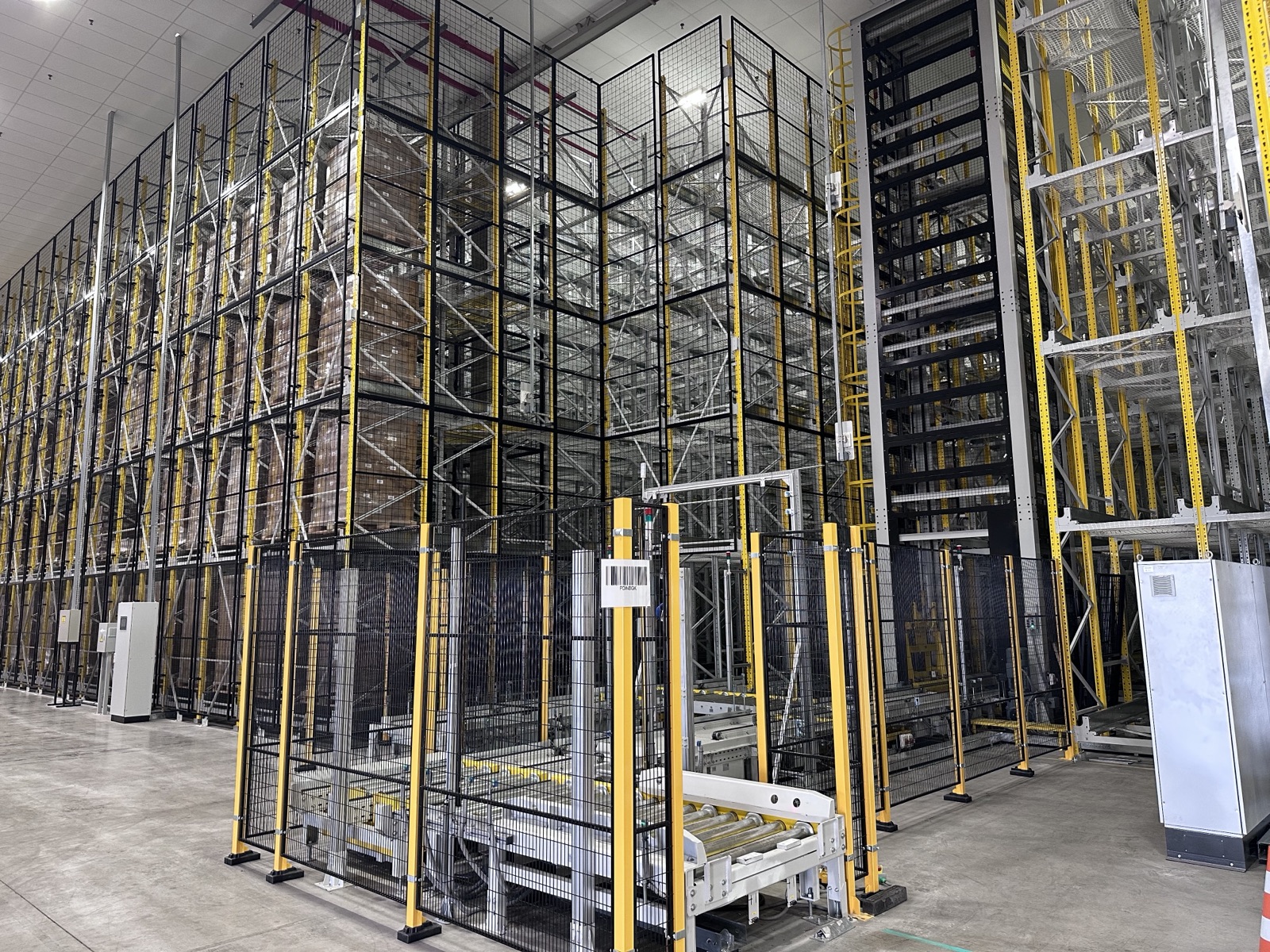
Four-Way Shuttle Racking System
Fully automated high-density pallet storage where the racking and the robots are engineered as one system. Delivered up to 32 m high-bay, from pilot blocks of 2,000 positions to mega-sites of 50,000+.
How a four-way shuttle system works
A four-way shuttle system stores pallets in deep, dense lanes while omnidirectional shuttle cars travel both along and across the aisles, transferring between levels via vertical lifts. The result is AS/RS-level automation with far greater layout flexibility than crane-based systems — and storage density that conventional forklift racking cannot reach.
The rack structure is the foundation of the whole system
The rack structure is the foundation of the whole system. Rail straightness, lane tolerances and beam deflection directly determine whether shuttles run smoothly at full speed or fault out every shift. JISE engineers the racking to FEM 10.2.19 (the shuttle-racking design code) together with the shuttle supplier's interface data, so the steel and the robots are designed as one system — not patched together on site.
One system, five engineered layers.
JISE manufactures the structural heart of the system and integrates with your chosen shuttle and software suppliers — or supplies complete.
| Layer | What it does | JISE scope |
|---|---|---|
| Rack structure | Frames, lane rails, guides — the precision structure shuttles run inside | Design + manufacture to FEM 10.2.19 |
| Four-way shuttles | Omnidirectional cars moving pallets along and across aisles | Integrated from qualified suppliers, or interface-engineered to your brand |
| Vertical lifts | Transfer shuttles and pallets between levels | Integrated; shaft structure by JISE |
| Conveyors & I/O | Inbound/outbound stations, pallet handling at the rack face | Integrated per layout |
| WMS / WCS | Inventory logic, task scheduling, fleet coordination | Interface support; supplied by integrator partner |
Why the rack decides whether the robots work.
A four-way shuttle is a machine that lives inside the rack. Three structural disciplines decide if it runs at rated speed — or faults every shift.
Lane-rail alignment
Rail straightness and continuity directly limit shuttle speed and wheel life. FEM 10.2.19 sets deformation limits under moving loads; we manufacture and verify to them.
Fatigue, not just strength
Thousands of loaded passes per day make lane rails a fatigue component. Design is verified against the project's specified load cycles — a step static racking never needs.
The rack–robot interface
Rail profiles, clearances and tolerances are exchanged with the shuttle supplier's engineering team as documented data — not discovered on site during commissioning.
See a system in operation.
Four-way shuttle installation overview — English narration.
Delivered four-way projects.
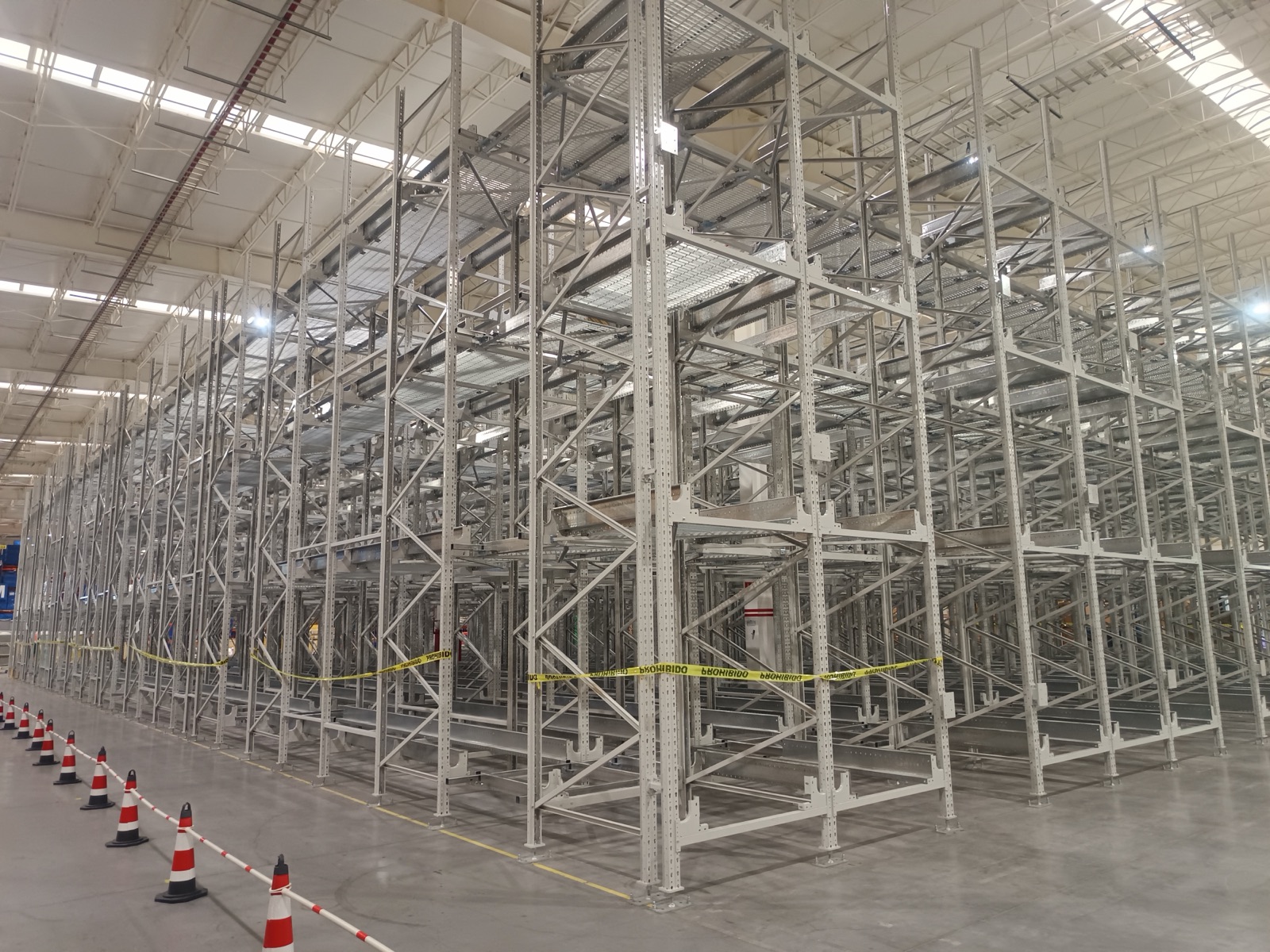
24,000+ pallet positions
Four-way shuttle racking, 32 m high-bay — Automotive manufacturing.
Read case →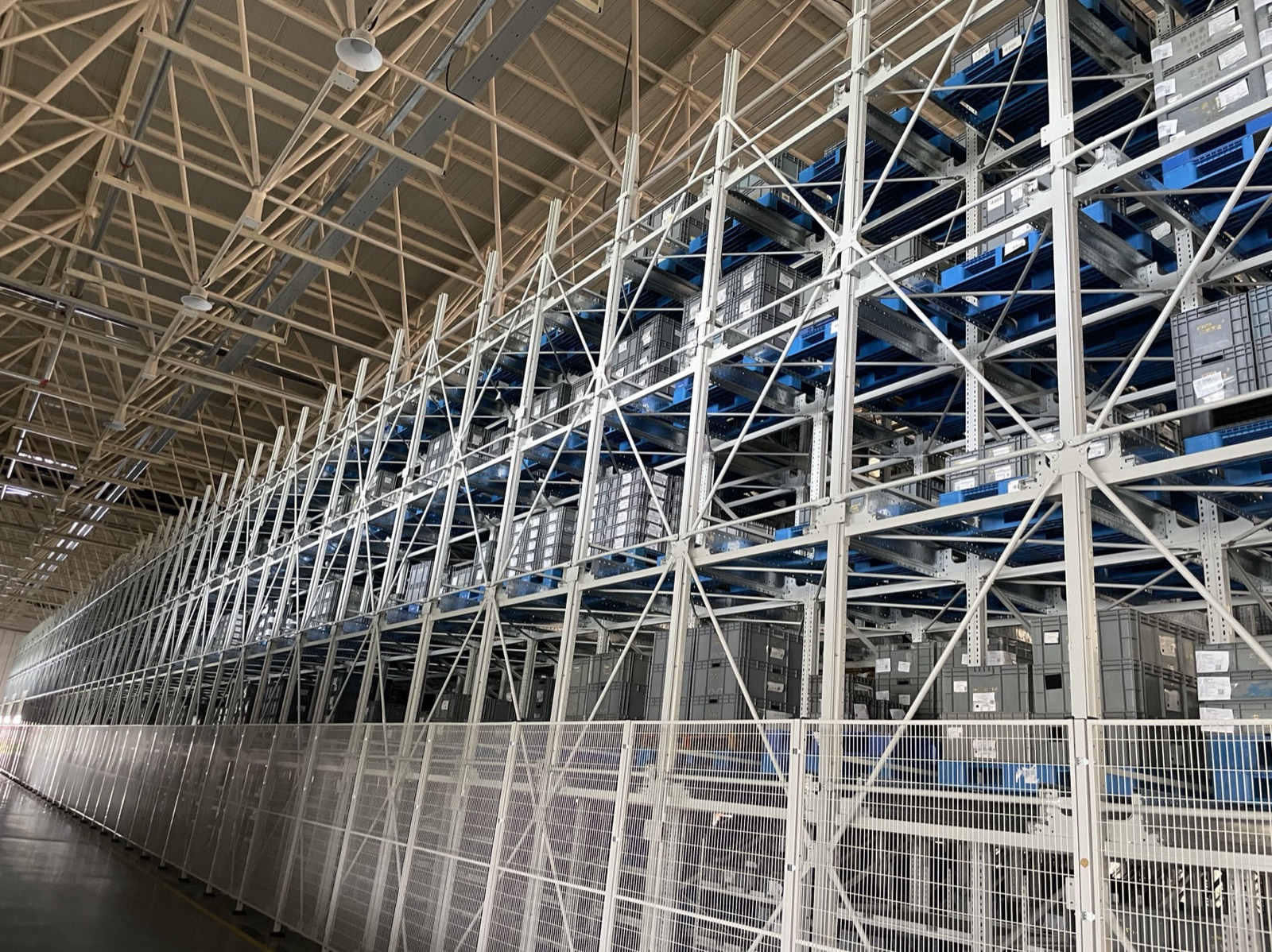
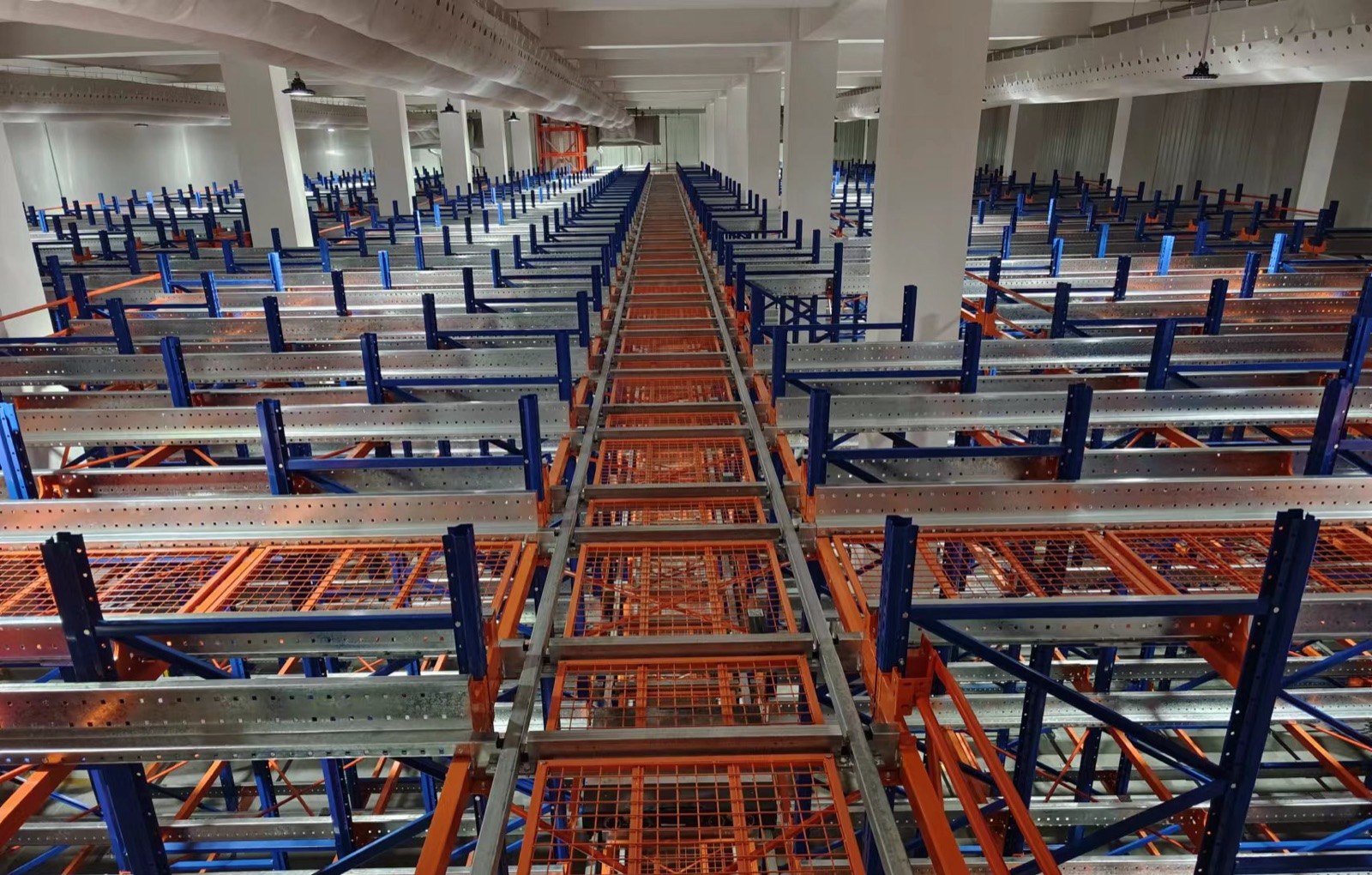
Design standards.
Get a four-way shuttle system proposal.
Send warehouse dimensions, pallet spec, target positions and destination — layout and budgetary price back within 48 hours.